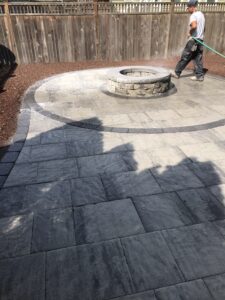
There’s something about a fire pit that changes how you use your yard. Suddenly, evenings that used to end when the sun went down turn into something longer. Cooler nights become an excuse to grab a sweatshirt and a blanket instead of heading inside. Friends linger. Kids roast marshmallows. You actually use the backyard.
It’s easy to see why fire pits have become one of the most popular hardscaping projects we build. But before you start shopping for stones or picking out a spot, there are a few things worth thinking through. A fire pit isn’t complicated, but doing it right makes the difference between a feature you love and one you worry about.
Here are five things to consider before you build.
1. Location Matters More Than You Think
It’s tempting to put a fire pit right off the patio where it’s convenient. But convenience isn’t the same as safe.
You’ll want at least 10 to 20 feet between your fire pit and your house, your fence, or any trees. Overhanging branches are a bigger risk than people realize. Hot embers rise, and if there’s a limb hanging overhead, it doesn’t take much to turn a relaxing evening into something stressful.
Also think about wind. Here in Anne Arundel County, we get breezes off the water and gusts that shift direction quickly. A spot that feels sheltered on a calm day might funnel smoke right into your seating area on an evening with a breeze.
2. What You Burn Matters
Wood-burning fire pits are classic. They smell good. They sound good. But not all wood is the same.
Seasoned hardwood, such as oak, hickory, and maple, burns hot and clean. Green wood or softwoods like pine create more smoke and can cause something called creosote buildup, which is basically gunk that sticks to the inside of your pit and becomes a fire hazard over time.
If you’re leaning toward a gas fire pit, you’re trading some of that campfire smell for convenience. Gas pits turn on with a switch, no kindling, no waiting. They’re also easier to control and produce almost no smoke. Both options work. It just depends on how you want to use the space.
3. The Surface Underneath Is Non-Negotiable
A fire pit needs a base that won’t catch or crack. Grass might seem fine until heat dries it out and embers land on it. Wood decks are risky no matter how careful you are.
The safest surfaces are stone, gravel, brick, or concrete. That doesn’t mean you need to pave your whole yard. A simple patio pad underneath the pit, just the size of the seating area, does the job. When we build fire pits, we’re thinking about what’s underneath and around it, not just what you see on top.
4. Size Affects How You’ll Use It
A fire pit that’s too small won’t throw enough heat for more than two people. One that’s too large becomes a hassle to manage and can feel overwhelming in the space.
For most backyards, a pit with a 36- to 44-inch diameter works well. That gives you a fire big enough to feel warm without turning into a bonfire. The seating area matters too. If you have to sit ten feet away to be comfortable, you lose some of the closeness that makes a fire pit enjoyable.
5. A Little Planning Goes a Long Way
The fire pits we build that get used the most aren’t necessarily the fanciest. They’re the ones that fit naturally into how people actually live. That means thinking about where people will sit, how they’ll get in and out of the space, and whether the pit is easy to reach from the house when you’re carrying drinks or a plate of food.
We’ve also learned that people appreciate details they didn’t know to ask for, like a built-in lip around the edge to hold a drink or storage nearby for wood or a cover.
Create Your Dream Fire Pit Today
If you’ve been thinking about adding a fire pit to your yard, the good news is that it’s one of those projects you’ll use more than you expect. The better news is that getting the details right upfront means years of worry-free evenings around the fire.
Give us a call or text when you’re ready to talk ideas. We’ll walk your property with you, talk through options, and help you figure out what fits your space and how you actually want to use it.