It seems simple enough. You buy a few bags of mulch from the home improvement store. You dump it around your trees and flower beds. It looks nice. Job done, right? Not exactly.
Mulching is one of those things that seems foolproof but actually has a few rules. Get it right, and your plants thrive. Get it wrong, and you might be doing more harm than good without even realizing it. Here are some of the most common mulch myths we hear, and what actually works.
Myth #1: More Mulch Is Always Better
This is the big one. Walk through any neighborhood and you’ll see it: mulch piled high against tree trunks like a volcano. Sometimes six, eight, even ten inches deep. More is not better. It’s just more.
When you pile mulch too deep, it smothers the roots. Water has trouble penetrating. Air can’t reach the soil. And if the mulch is right up against the tree trunk, you’re inviting rot, fungi, and insects to move in.
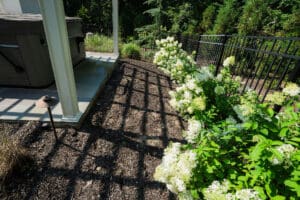
The right amount is two to three inches. That’s it. Enough to suppress weeds and hold moisture, but thin enough that water and air can still do their jobs.
Myth #2: Mulch Once and You’re Done for the Year
Mulch breaks down over time. That’s actually a good thing; it adds organic matter to your soil. But it also means that layer of mulch you put down in the spring is thinner by fall.
A fresh layer once a year, usually in spring, keeps your beds looking tidy and your plants happy. Some homeowners do a light refresh in the fall, too. But there’s no need to pile it on twice a year if you put down the right amount to begin with.
Myth #3: Any Mulch Is Good Mulch
Not all mulch is created equal.
Dyed mulch, that bright red or black stuff, looks dramatic at first. But the dye fades. And some of those dyes can leach into the soil over time. It’s not a disaster, but it’s not doing your plants any favors either.
Natural, undyed wood chips or shredded bark are the safer choice. They break down naturally, feed the soil, and look more like something that belongs in a garden.
Cypress mulch is popular in some areas, but it’s not locally sustainable. Cedar mulch smells great and repels some insects, but it’s pricier. The best choice for Anne Arundel County is usually a local hardwood mulch. It’s affordable, it’s available, and it works.
Myth #4: Mulch Kills Weeds Completely
Mulching suppresses weeds. It does not eliminate them.
A two- to three-inch layer will stop most weed seeds from germinating. But some tough weeds will push through anyway. And if you already have weeds growing before you put down mulch, they’ll just grow right through it.
The trick is to pull existing weeds first, then put down the mulch. A layer of landscape fabric underneath can help, but it’s not magic. Weeds find a way. Regular maintenance, such as a quick walk through the beds once a week to pull what’s sprouted, is still part of the deal.
Myth #5: Mulch Is Only for Looks
Mulch does make your yard look polished. That’s true. But that’s not its only job.
A good layer of mulch keeps the soil cool in summer and helps it stay warm in winter. It holds moisture so you don’t have to water as often. It prevents erosion on slopes. And as it breaks down, it feeds the soil with nutrients your plants actually use.
So yes, it looks nice. But it’s also doing real work underground.
A Few Local Things to Know
Anne Arundel County has its own rhythm. Spring comes early some years, late in others. Mulching too early, before the soil has warmed up, can actually trap cold air and slow down your plants’ growth.
Wait until the soil temperature is consistently above 50 degrees. That’s usually mid-to-late April around here. And if you’re using mulch to protect tender plants over winter, wait until after the first hard frost to put that layer down.
Still Have Questions?
Mulching isn’t complicated, but the details matter. If you’re not sure what kind to use, how much to buy, or when to put it down, we’re happy to help. Give us a call or a text. We’ll take a look at your yard, give you straight answers, and, if you want, take the whole job off your hands.
No pressure. Just good advice from people who’ve been working with Anne Arundel County soil for over 25 years.