You’ve been thinking about upgrading your yard. Maybe you want a place to put the grill and some chairs. Maybe you’re tired of walking across muddy grass every time you go from the driveway to the back door. You’ve heard the words “patio” and “paver walkway,” but honestly, you’re not totally sure what separates them.
You’re not alone. Most homeowners don’t think about hardscaping until they’re ready to do a project. And that’s fine. The important thing is understanding the basics so you can make a choice you’ll be happy with for years. Let’s break it down simply.
What’s a Patio, Exactly?
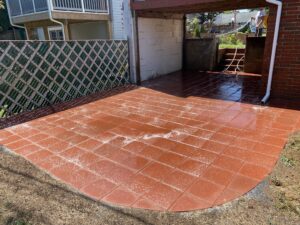
A patio is a flat, open area meant for hanging out. Think of it as an outdoor room without walls. It’s where the furniture goes. The fire pit and grill. It’s the spot where you sit with coffee on a Saturday morning.
Patios are usually built close to the house, right off a back door or sliding glass door. That makes them easy to reach from the kitchen when you’re carrying plates or drinks. They can be big enough for a full dining set or small and cozy for just two chairs.
Materials vary: concrete, stone, brick, or pavers. But the function is always a stable, level surface for living outside.
What’s a Paver Walkway?
A walkway is exactly what it sounds like. It’s a path from one place to another. From the driveway to the front door. From the back patio to the garden shed. Or from the sidewalk to your side gate.
Walkways don’t need to be wide. Most are two to four feet across, just enough for one person to walk comfortably. Their whole job is to guide you through the yard and keep your shoes clean.
Why “paver” walkway? Because pavers are the most common material for this job. Pavers are individual pieces, brick-sized or a little larger, that lock together. They’re tough, they handle freeze-thaw cycles well (important in Anne Arundel County), and if one gets damaged, you just replace that single piece instead of tearing up a whole slab.
So Which One Do You Need?
Here’s where people get tripped up. They think they have to choose one or the other. But most yards benefit from both.
Ask yourself these two questions:
- Do you need a place to stop and stay? That’s a patio. If you want to sit, eat, grill, or gather, you want a patio.
- Do you need a way to get there without walking on grass or mud? That’s a walkway. If you’re tired of the path between your driveway and your back door turning into a swamp every time it rains, you want a walkway.
Sometimes a walkway leads to a patio. Sometimes the patio connects directly to the house and you don’t need a separate path. And sometimes you just need a small landing at the bottom of the steps and a short walkway to the garage.
What About the In-Between Options?
Some projects blur the line. A wide walkway with a small circle at the end, just big enough for a birdbath and a bench, isn’t quite a patio and isn’t quite a path. That’s fine. Call it whatever you want. The label matters less than whether it works for how you actually use your yard.
A Few Local Things to Keep in Mind
Anne Arundel County soil has a lot of clay in some areas and sand in others. That matters for drainage. A patio or walkway needs a proper base underneath, such as gravel, sand, or compacted layers, or it will shift, settle, and crack within a couple of years. That’s not a fun surprise.
Also think about freeze and thaw. Water gets into small cracks, freezes, expands, and makes those cracks bigger. Good materials and proper installation are what save you from replacing everything in five years.
Ready to Figure Out What Fits Your Yard?
If you’re not sure whether you need a patio, a walkway, both, or something totally different, that’s exactly where a conversation helps. Give us a call or a text. We’ll walk your property with you, talk through how you actually use the space, and help you see what’s possible.
No pressure. Just honest advice from people who’ve been building these projects in Anne Arundel County for over 25 years.